
⏱ 4 min read
AI Tools That Are Reshaping Professional Workflows in 2024
According to recent surveys, many professionals now use AI tools daily; that’s a notable increase from 2022. AI has moved from automating routine tasks to enhancing creative processes. It’s now an essential component of modern professional workflows, not merely a futuristic concept. Whether you’re a marketer, designer, writer, or business analyst, the right AI tools may help boost productivity and output quality.
The Current State of AI in Professional Environments
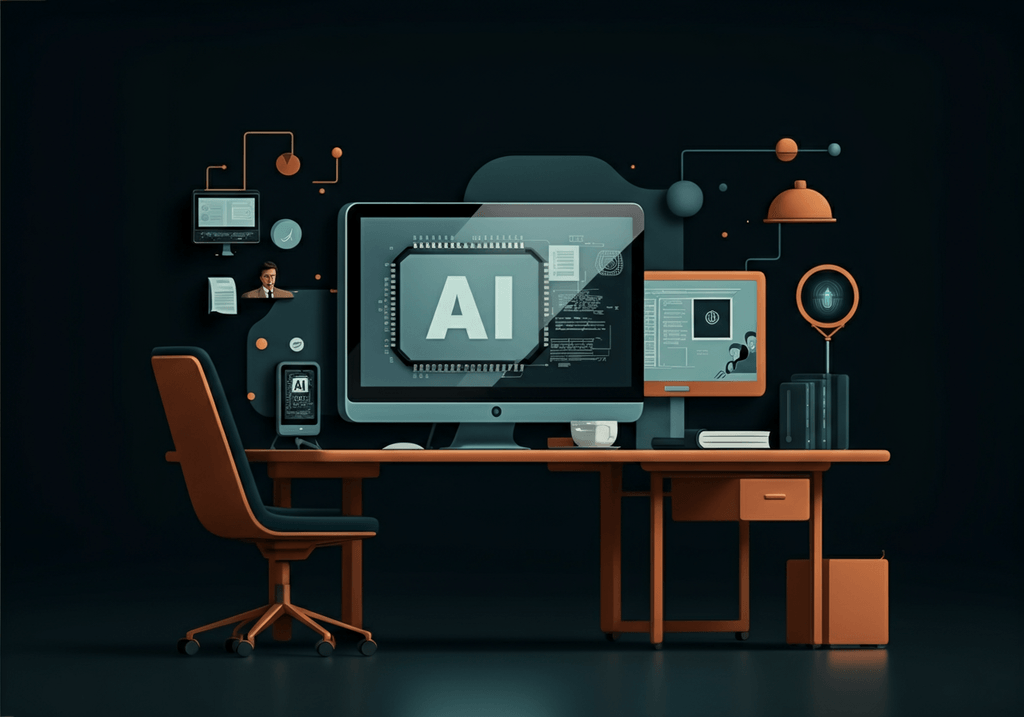
Artificial intelligence now functions as a valuable partner in professional decision-making. Today’s AI tools analyze complex data sets, generate creative content, and predict market trends with measurable accuracy. This shift allows professionals to focus on strategy while AI handles time-consuming operational work. Adoption is accelerating across sectors. Many knowledge workers use at least one AI tool regularly. This represents a fundamental change in how work gets done.
Content Creation and Writing Tools
AI-powered writing assistants have become important for content creators, marketers, and business professionals. Jasper and Copy.ai each report a substantial number of active users. These tools generate initial drafts, improve existing content, and maintain consistent brand voice across platforms. Advanced language models produce blog posts, social media content, email campaigns, and technical documentation with minimal input. The most effective approach combines AI efficiency with human creativity and strategic oversight. Professional writers often treat AI as a collaborative partner, not a replacement. Grammar and style checkers powered by machine learning now offer context-aware suggestions beyond basic spell-checking. They adapt to different writing styles and industry-specific terminology, making them valuable across various sectors.
Design and Visual Content Generation
AI innovation has impacted the creative industry. Midjourney and DALL-E generated a significant number of images in 2023 alone. Design professionals now access tools that generate logos, create social media graphics, and produce complex illustrations from text descriptions. AI-powered design platforms democratize visual content creation. Non-designers can produce professional-quality graphics using machine learning algorithms trained on numerous design examples. These systems understand composition, color theory, and visual hierarchy. Photo editing tools now remove backgrounds, enhance image quality, and generate new visual elements. Professional photographers and graphic designers often integrate these capabilities to streamline workflows and explore previously time-prohibitive creative possibilities.
Data Analysis and Business Intelligence
Business professionals can extract insights from complex data sets that would typically require extensive manual analysis. AI platforms identify patterns, predict trends, and generate actionable recommendations based on historical data and market conditions. Automated reporting tools create comprehensive business intelligence dashboards that update in real-time. Executives and managers can make informed decisions quickly. The ability to process unstructured data, such as social media sentiment, customer feedback, and market research, opens new planning avenues. Predictive analytics powered by machine learning may forecast demand, improve inventory management, and identify operational risks early. These capabilities are particularly valuable for supply chain management, financial planning, and customer relationship management.
Communication and Collaboration Enhancement
AI tools are reshaping how professionals communicate and collaborate. Intelligent scheduling assistants coordinate meetings across multiple time zones. AI-powered translation tools enable seamless multilingual communication. Meeting transcription and summarization tools have become essential for remote and hybrid work. These platforms identify key discussion points, track action items, and generate comprehensive meeting notes automatically. Important information is often captured despite busy schedules. Customer service functions benefit from AI chatbots and automated response systems that handle routine inquiries while escalating complex issues to human representatives. Response times may improve while customer service professionals focus on high-value interactions.
Project Management and Workflow Optimization
AI-driven project management tools often improve resource allocation, predict project timelines, and identify bottlenecks before they impact deliverables. These platforms analyze historical project data to provide realistic estimates and suggest optimal team configurations. Workflow automation tools connect different software applications, creating seamless processes that reduce manual data entry and human error. Professional services firms may streamline client onboarding, invoice processing, and project delivery workflows. Task prioritization algorithms can help professionals manage complex workloads by analyzing deadlines, dependencies, and resource requirements. This approach to time management is particularly valuable for consultants, freelancers, and project managers juggling multiple priorities.
Implementation Strategies for Professional Success
Start by identifying repetitive tasks that consume significant time but don’t require complex decision-making. These areas typically offer the highest return on investment for AI automation. Training periods are essential for maximizing AI tool benefits. Most platforms require users to understand their capabilities and limitations. Investing time in proper prompt engineering, data preparation, and result interpretation may deliver long-term productivity gains. Maintain human oversight and quality control when implementing AI solutions. These tools often work best when combined with professional expertise and strategic thinking. Use AI to enhance your capabilities, not replace your judgment.
What’s Next
Microsoft and Google invest significantly in AI development; new capabilities launch regularly across professional software suites. Integration between different AI platforms is improving, creating more seamless workflows across professional functions. This trend toward interconnected AI ecosystems is likely to accelerate. Customization and industry-specific AI solutions are becoming more common. Professionals can access tools tailored to their specific needs and regulatory requirements. Specialization may deepen AI adoption within professional niches. As AI tools become more sophisticated, human skills like creativity, strategic thinking, and emotional intelligence may become increasingly valuable. Professionals who combine AI capabilities with uniquely human insights may maintain competitive advantages in increasingly automated workplaces.